The Complete Guide to Editing Your Own Work

Most writing gurus will try to sell you a “complete guide to self editing” that feels like a spiritual journey or a magical ritual involving moonlight and expensive software. They make it sound like you’re discovering your soul, when in reality, you’re just trying to figure out why your protagonist has been standing in the same kitchen for six pages without actually doing anything. I spent my early years in publishing watching writers mistake polishing for editing; they’d spend three weeks perfecting the rhythm of a sentence that shouldn’t even exist in the first place. If you aren’t prepared to be a little bit ruthless with your own ego, you aren’t editing—you’re just rearranging the deck chairs on a sinking ship.
I’m not here to give you a lecture on “finding your voice.” I’m here to give you a structural autopsy. This guide is about the unglamorous, bone-deep work of cutting the fat, fixing the pacing, and ensuring your manuscript doesn’t arrive on an editor’s desk looking like a first draft in denial. I will show you how to approach your work with the clinical eye of a professional so that when you finally do pay for a human editor, you aren’t wasting your hard-earned money on things you could have fixed yourself.
Mastering Structural Editing Steps Before You Hire Help

Before you even think about opening a Word document to hunt for typos, you need to look at the skeleton. Most writers dive straight into the shallow end of the pool—fixing commas and swapping adjectives—when they should be checking if the bones are actually connected. This is where most people fail at structural editing steps. You aren’t looking for “good writing” here; you are looking for logic. If Chapter Four doesn’t matter to the resolution of Chapter Twenty, it doesn’t matter how beautiful the prose is. Cut it. I have seen countless manuscripts that are technically proficient but structurally hollow, and frankly, no amount of polishing can save a story that doesn’t know where it’s going.
Once the architecture is sound, you can move toward improving narrative flow. This is the stage where you ensure the reader isn’t tripping over sudden shifts in tone or unexplained character motivations. Don’t confuse this with the final polish; you aren’t doing proofreading vs editing yet. Proofreading is the fine-tooth comb at the very end, but structural work is the sledgehammer. You need to be willing to move entire scenes or delete characters that serve no purpose other than making you feel clever. If it doesn’t move the needle, it’s just expensive clutter.
Improving Narrative Flow to Save Your Professional Reputation
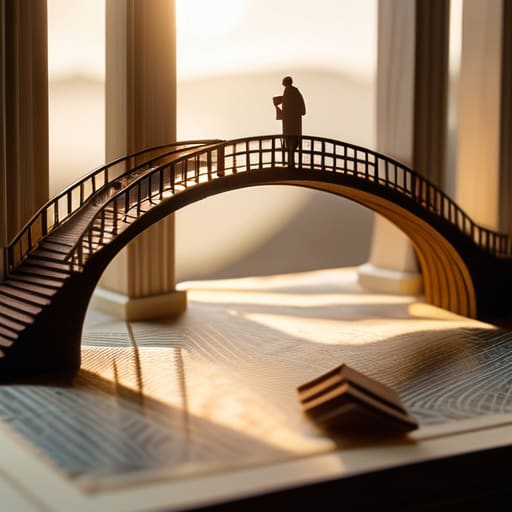
Once you’ve fixed the structural bones, you have to deal with the connective tissue. This is where most writers stumble, drifting into a series of scenes that feel like a collection of disconnected islands rather than a coherent journey. Improving narrative flow isn’t about adding more “stuff”; it’s about the invisible architecture of transition. If a reader has to stop and ask, “Wait, how did we get here?” you have failed. You haven’t just lost their attention; you’ve signaled to any professional reader that you haven’t done the heavy lifting required to earn their time.
To fix this, you need to look at your sentence pacing and logical progression. This is a specific type of manuscript revision technique that requires you to read your work aloud—and yes, it will be painful. You are looking for the rhythmic stutters and the places where you’ve relied on clunky transitions to bridge gaps in logic. Stop treating your chapters like silos. Instead, focus on the momentum of causality: every scene should be the inevitable result of the one before it. If you can’t find that thread, no amount of expensive copyediting will save the book from feeling disjointed.
Five Ways to Stop Treating Your Manuscript Like a Sacred Text
- Kill your darlings, but do it with a scalpel, not a sledgehammer. If a paragraph is beautiful but doesn’t actually move the needle on the argument or the plot, it’s just vanity. I’ve seen more books ruined by “lovely” prose that goes nowhere than by bad grammar.
- Read the damn thing aloud. Your eyes are liars; they see what you intended to write, not what is actually on the page. Your ears, however, will catch every rhythmic stumble and every clunky, three-syllable word you used just to feel clever. If you run out of breath reading a sentence, the sentence is too long. Period.
- Change the font and the medium. If you’ve been staring at Times New Roman on a MacBook for six months, your brain has gone numb to the errors. Switch to a serif font you hate, or better yet, print it out. There is a specific kind of cognitive reset that happens when you move from a backlit screen to physical paper.
- Hunt for your “crutch words” like they’re a virus. We all have them—”just,” “very,” “really,” or that one adverb you use when you’re too tired to find a stronger verb. Run a search for your personal offenders. If you find “suddenly” appearing every three pages, you aren’t writing tension; you’re just being repetitive.
- Distance is your only defense against delusion. You cannot effectively self-edit a draft you finished yesterday. Put it in a digital drawer for at least two weeks. You need to come back to the text as a stranger, not as the person who spent forty hours agonizing over a single chapter. If you can’t look at it objectively, you aren’t editing; you’re just rearranging deck chairs.
The Bottom Line on Self-Editing
Stop treating your manuscript like a precious heirloom; if you aren’t willing to cut a beloved chapter that isn’t working, you aren’t editing, you’re just rearranging the furniture in a sinking house.
Distinguish between “fixing” and “polishing”—structural integrity comes first, because no amount of lyrical prose can save a story that lacks a coherent spine.
Respect the professional boundary by doing the heavy lifting yourself; an editor is there to refine your vision, not to act as a glorified janitor for a draft that hasn’t been properly swept.
## The Myth of the Finished Draft
Self-editing isn’t about finding the right adjectives; it’s about the structural violence of cutting your favorite scenes because they don’t actually move the story forward. If you aren’t prepared to kill your darlings to save your pacing, you aren’t editing—you’re just rearranging the deck chairs on a sinking manuscript.
Cressida Farrow-Bassey
The Final Cut
At the end of the day, self-editing isn’t about making your prose pretty; it’s about making it functional. You’ve looked at the architecture of your chapters, you’ve smoothed out the jagged edges of your transitions, and you’ve hopefully stopped using three adjectives where one sharp verb would have done the job. If you’ve done this work properly, you aren’t just handing over a draft; you are handing over a professional asset. Remember that every hour you spend gutting a redundant scene or fixing a pacing issue is an hour you aren’t paying a professional editor to do the heavy lifting for you. Treat your manuscript like a business document, because once it leaves your hands, it becomes your reputation.
There is a certain kind of exhaustion that comes with staring at the same ten thousand words until they stop looking like language and start looking like ink blots. I know that feeling well. But there is also a profound, quiet satisfaction in knowing that when you finally hit ‘send’ to an agent or a publisher, you aren’t sending a plea for mercy—you’re sending a finished product. Don’t let the fear of “ruining” your story stop you from cutting the parts that don’t work. The best version of your book lives on the other side of the red pen, and it’s worth the struggle to find it.
