Editing Your Own Work in Separate Passes

I once sat in a windowless office in Bloomsbury, staring at a manuscript that had been “self-edited” by an author who clearly thought that adding more adjectives was the same thing as adding more meaning. I watched my editor drain three cups of lukewarm tea while we performed what felt less like a revision and more like an autopsy. Most of the advice you find online about how to edit your own writing is fluff designed to make you feel like a creative genius, but the reality is much grittier: editing isn’t about finding the “right” words, it’s about having the courage to kill the ones you worked so hard to write.
I’m not here to tell you to find your muse or wait for the lightning bolt of inspiration to strike. I’m here to talk about the mechanical, often painful labor of structure, syntax, and ruthless economy. I will show you how to approach your work with the cold eye of a professional, moving past the ego that clings to every sentence, so you can stop handing editors a mess that costs them time and costs you money.
The Writing Revision Process Why Your First Draft Is a Lie
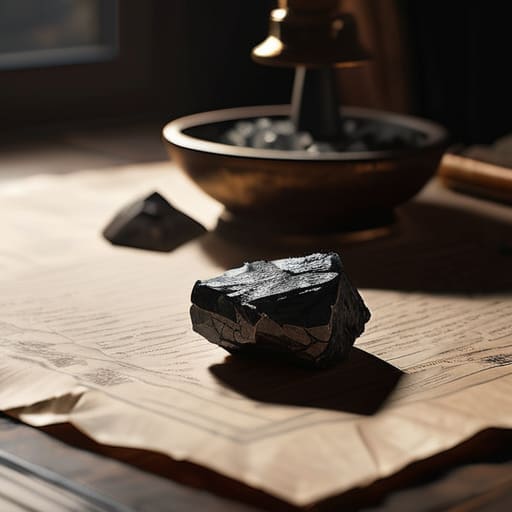
The first draft is not a foundation; it is a pile of raw, unrefined ore that you have dumped on the floor. I have seen writers treat their initial output like a sacred text, polishing a single paragraph for three hours while the rest of the chapter remains a structural disaster. This is a waste of your time and, eventually, a waste of an editor’s billable hours. The truth is that your first draft is a lie—it is a map of where you wanted to go, not where you actually arrived.
To navigate the writing revision process effectively, you must learn to separate the act of creation from the act of curation. You cannot fix the logic of a scene while you are still trying to find the right adjective for the weather. True progress happens when you step back and look at the architecture. This means improving sentence structure by gutting the fluff and ensuring each clause earns its keep. If you aren’t prepared to kill your darlings to save the narrative, you aren’t editing; you’re just rearranging the deck chairs on a sinking ship.
Eliminating Wordiness to Save Your Readers Time
Most writers treat words like they’re free, but in a professional manuscript, every unnecessary syllable is just clutter that obscures your point. When I’m performing deep copy editing techniques on a client’s draft, the first thing I look for isn’t the plot—it’s the linguistic bloat. You’ll find yourself leaning on “very,” “really,” or “just” as if they were structural supports, when in reality, they are just dead weight. Eliminating wordiness isn’t about being brief for the sake of brevity; it’s about ensuring the reader doesn’t have to work twice as hard to find your actual meaning.
A practical way to spot this is through reading aloud for flow. If you find yourself tripping over a sentence or running out of breath before you hit the period, you haven’t just written a long sentence—you’ve written a bad one. This is where the heavy lifting of the writing revision process happens. You aren’t just polishing the surface; you are stripping away the scaffolding so the actual architecture of your thought can stand on its own.
Five Ways to Stop Sabotaging Your Own Manuscript
- Kill your darlings before they kill your pacing. That metaphor you spent three hours polishing? If it doesn’t move the story forward or reveal something essential about the character, it’s just vanity. Cut it. A beautiful sentence that goes nowhere is just expensive clutter.
- Read your work aloud, or better yet, use a text-to-speech tool and listen to it while you do the dishes. Your eyes will skip over typos and rhythmic failures because they know what you meant to write; your ears will catch the clunky, repetitive phrasing that makes a reader want to close the book.
- Check your dialogue for “talking head” syndrome. If your characters are just exchanging information in a vacuum, you’re writing a script, not a novel. Give them something to do—a task, a distraction, a physical tension—that forces the words to compete with the reality of the scene.
- Hunt down your crutch words. We all have them—the “justs,” the “reallys,” the “suddenlys.” They are the linguistic equivalent of filler in a cheap cocktail; they take up space without adding any actual substance. If a word isn’t doing heavy lifting, it’s dead weight.
- Distance yourself from the text. You cannot edit a manuscript you wrote yesterday; you are too close to the wound. Put it in a drawer for at least a week. You need to come back to it as a stranger, someone looking for flaws, not a creator looking for praise.
The Bottom Line on Self-Editing
Stop trying to polish a sentence that shouldn’t exist in the first place; you can’t edit your way out of a structural failure, so learn to cut the entire chapter if it isn’t serving the book.
Treat your word count like a budget—every unnecessary adverb and “just” is a leak in your bank account that makes the reader work harder for less payoff.
Distance is your only real tool, so walk away from the manuscript for at least forty-eight hours before you touch it, or you’ll just end up rearranging the deck chairs on a sinking ship.
## The Emotional Cost of the Red Pen
“Editing isn’t about polishing your precious prose until it shines; it’s about having the professional discipline to murder your darlings when they’re clearly just taking up space and wasting your reader’s time.”
Cressida Farrow-Bassey
The Final Cut
At the end of the day, editing isn’t about fixing typos; it’s about the structural integrity of your argument and the economy of your language. You have to go back through that mess of a first draft, strip away the verbal clutter that’s padding your word count, and ensure every sentence is actually earning its keep. If you aren’t willing to ruthlessly prune your own prose, you are essentially asking an editor to do the heavy lifting for you—and in this industry, that is a luxury most writers can’t afford. Remember that a tighter manuscript doesn’t just read better; it respects the reader’s time and, more importantly, it makes your work significantly more marketable when it finally hits a professional desk.
I know it feels personal. It feels like you’re tearing pieces of yourself away every time you delete a paragraph you spent three hours sweating over. But you have to learn to separate your ego from your output. The magic doesn’t happen in the initial burst of inspiration; it happens in the quiet, disciplined hours of the second, third, and fourth passes. Treat your writing like the professional craft it is, not a precious relic. Once you stop being afraid of the red pen, you’ll realize that the edit is where the real writing begins. Now, go back to page one and start cutting.
