Cutting Fifteen Percent Without Losing Anything

I remember sitting in a cramped, windowless office in Bloomsbury back in ’98, staring at a manuscript that was essentially a graveyard of adjectives. The author had spent three months polishing every sentence, convinced that “more” meant “better,” while I sat there calculating how much of my actual life was being swallowed up by their wordiness. Most writing gurus will tell you that tightening your work is about finding your “voice” or waiting for a moment of divine inspiration, but that’s a lie designed to sell expensive masterclasses. If you want to know how to tighten prose, you don’t need a muse; you need a scalpel and the willingness to admit that your favorite sentence is actually just clutter.
I’m not here to give you poetic platitudes or tell you to “feel the rhythm” of your nouns. I’m going to show you the mechanical, often painful reality of trimming the fat so you don’t end up paying a copy editor to do the heavy lifting for you. We are going to look at the specific structural habits that bloat your word count and, more importantly, how to tighten prose without losing the soul of your story. This is about efficiency, clarity, and protecting your margins.
Eliminating Wordiness in Writing to Protect Your Word Count
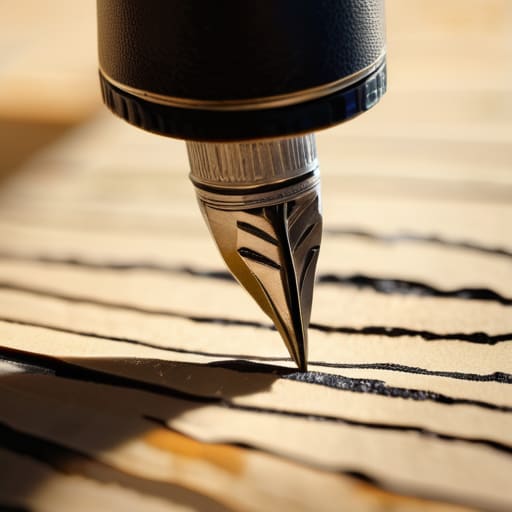
When I look at a manuscript, I don’t just see ideas; I see a budget. Every unnecessary syllable is a withdrawal from your reader’s attention span and, if you’re paying a developmental editor by the hour, a direct hit to your bank account. Eliminating wordiness in writing isn’t about being a minimalist for the sake of aesthetics; it’s about efficiency. If you can convey a concept in six words instead of twelve, do it. You aren’t being paid by the word, and neither is your reader.
The quickest way to bleed momentum is through a heavy reliance on the passive voice. It creates a fog where things “are being done” rather than people actually doing them. When you shift your focus toward active vs passive voice transitions, the pacing of your prose tightens almost instantly. Stop hiding your subjects behind a wall of “was,” “were,” and “had been.” It’s the difference between a sentence that marches forward and one that trips over its own feet. Tighten the mechanics, and you’ll find you have much more room for the ideas that actually matter.
Removing Redundant Phrases That Kill Your Profit Margin

We need to talk about the “double-stamping” problem. I see it in almost every manuscript that hits my desk: writers using two words when one would do the job more effectively. Phrases like “unexpected surprise,” “future plans,” or “tuna fish” aren’t just slightly annoying; they are symptoms of a writer who doesn’t trust their own nouns. When you are removing redundant phrases, you aren’t just cleaning up the page; you are reclaiming your authority. If a surprise is unexpected, the adjective is doing nothing but taking up space.
This habit often bleeds into your choice of verb, leading to a messy tug-of-war between active vs passive voice. When you rely on “he was walking” instead of “he walked,” you’re adding auxiliary weight that drags the momentum to a halt. From a purely financial standpoint, this is where the bleeding starts. If you’re paying a developmental editor by the hour or a copy editor by the word, every instance of “the fact that” or “in order to” is essentially a micro-tax on your budget. Tighten it up now, or pay for it later.
Five Ways to Stop Bleeding Words (and Money)
- Kill your “filter words” before they distance the reader. When you write “he felt the cold wind” or “she saw the car turn,” you’re adding an unnecessary layer of mediation. Just say “the wind was cold” or “the car turned.” Every time you use a sensory filter, you’re adding a word that does nothing but remind the reader they are reading a book.
- Watch out for the adverbial crutch. If your verb is weak, don’t try to prop it up with an “-ly” word. “He ran quickly” is lazy; “he sprinted” is efficient. If you find yourself leaning on adverbs to do the heavy lifting, your verbs are failing you, and you’re paying for the extra syllables.
- Beware the “passive voice” trap. It isn’t always a sin, but it is almost always a space-taker. “The decision was made by the committee” is a bloated, sluggish way of saying “the committee decided.” Passive voice slows the pace and makes your prose feel academic and detached—the last thing a reader wants.
- Stop using “prepositional pile-ups.” If you see a sentence with three or four “of,” “in,” or “to” phrases in a row, it’s a sign of structural decay. “The opinion of the manager of the department of sales” is a nightmare. “The sales manager’s opinion” is a professional sentence.
- Audit your “throat-clearing” openings. Many writers start sentences with “It is important to note that…” or “I would like to say that…” This is nothing more than linguistic hesitation. If it’s important, just say it. If you wouldn’t say the preamble out loud in a meeting, don’t put it in your manuscript.
The Bottom Line on Tight Prose
Treat every unnecessary word like a leak in your bank account; if it isn’t doing the heavy lifting of advancing the narrative or sharpening a point, it’s just dead weight that increases your editing costs.
Precision is more profitable than flourish—aim for the most direct verb rather than a weak verb paired with a lazy adverb, because clarity saves time and time is the only currency that matters.
Don’t wait for a professional to find your bloat; a self-aware writer who trims the fat before the first submission is a writer who commands higher respect and, eventually, better rates.
The Cost of Every Extra Word
Every time you use three words where one would suffice, you aren’t just cluttering the page; you’re actively devaluing your own work. If you’re charging by the project or trying to hit a specific word count for a commission, remember that bloat is just expensive noise that an editor is going to charge you to strip away later.
Cressida Farrow-Bassey
The Bottom Line on Tight Prose
At the end of the day, tightening your prose isn’t about being precious or performing some sort of literary asceticism; it is about efficiency. We have spent this time looking at how to strip away the verbal clutter, the redundant modifiers, and those bloated phrases that serve no purpose other than to pad your word count. When you remove the fluff, you aren’t just making the text cleaner; you are making it economical. Every unnecessary word is a distraction that pulls the reader away from your actual argument or narrative. If you can say it in ten words instead of twenty, do it. It saves the reader’s energy, it saves your editor’s time, and most importantly, it ensures that your ideas actually land instead of getting lost in a fog of adjectives.
I know it feels painful to look at a paragraph you spent an hour crafting and then decide to hack half of it away. It feels like losing progress. But I promise you, the version that remains will always be stronger than the version you started with. Writing is an act of constant refinement, a process of carving away the stone to find the statue underneath. Stop treating your first draft like a finished product and start treating it like raw material. Once you master the discipline of the cut, you stop being someone who just writes and start being someone who actually communicates. Now, go back through that chapter and see what else you can kill.
