Author: Cressida Farrow-Bassey

Writing is a job with rates, deadlines and invoices, and pretending otherwise keeps people poor. I write about what a copy edit actually costs, why your second draft is worse than your first, how a publishing contract really splits the money, and which parts of this trade have quietly stopped paying at all. I have been on both sides of the desk and I will tell you what editors say about manuscripts when the writer is not in the room.

The Complete Guide to Marketing a Book

If you’ve spent more than twenty minutes on Pinterest or LinkedIn, you’ve likely been fed a version of a “complete guide to book marketing” that involves nothing but aesthetic bookstagram setups, expensive masterclasses, and the delusional belief that a viral TikTok will somehow pay your mortgage. It’s a lovely, polished lie. I remember sitting in a cramped editorial office a decade ago, watching a mid-list author spend her entire modest advance on a “branding consultant” who promised visibility, only to watch her sales flatline two months later because she’d forgotten that books are physical products with logistical costs. Most marketing…

When You Need Permission to Quote

I once spent three weeks chasing a single, three-sentence quote from a mid-sized academic press, only to realize I’d been burning my billable hours on a phantom chase. Most writing guides treat the topic like a polite suggestion, implying that if you just cite your sources properly, you’re magically protected. That is a lie. The reality of how permissions work for quoted material is less about academic etiquette and more about preventing a legal headache that can swallow your entire advance before you’ve even seen a royalty statement. If you think “fair use” is a magic wand you can wave…

Where Libel Risk Actually Comes From

I remember sitting in a drafty editorial office in Soho, staring at a manuscript that was essentially a beautifully written pile of unverified accusations. The author thought they were being “brave” and “truth-telling,” but as I watched the legal department’s faces go pale, I realized they were actually just being reckless. People love to tell you that defamation is some abstract, high-level legal concept reserved for politicians and celebrities, but that’s a lie that keeps writers unprotected. In reality, understanding how defamation risk arises usually comes down to a single, poorly researched sentence or a “source” who can’t be bothered…

Producing an Audiobook and What It Costs

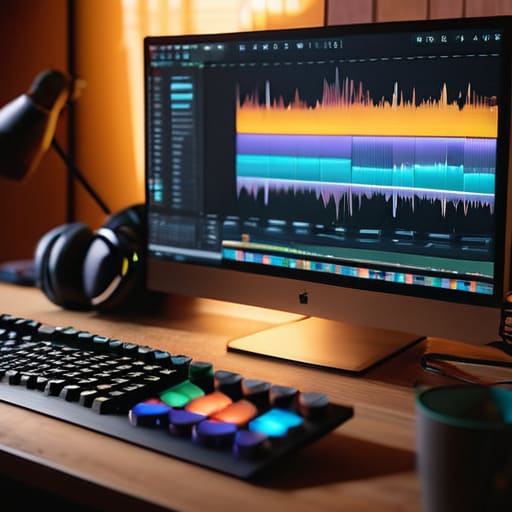
I remember sitting in a windowless studio three years ago, watching a narrator struggle through a technical error that had nothing to do with their voice and everything to do with a botched edit. There is this pervasive, expensive myth that if you just hire a “big name” voice, the rest of the process is a breeze. It’s nonsense. People tend to overcomplicate how audiobooks are produced, treating it like some magical alchemy of talent and microphones, when in reality, it is a grueling marathon of technical oversight and meticulous file management. If you aren’t accounting for the hours of…

The Warning Signs in the First Email

I remember sitting in a dimly lit café in Bloomsbury ten years ago, staring at a contract that felt less like a professional agreement and more like a hostage negotiation. The client—a man who spoke exclusively in vague, sweeping promises of “future exposure”—had spent forty minutes telling me how much he valued my talent, yet hadn’t once asked about my day rate. It’s a specific kind of vertigo, that realization that you’re being charmed by someone who has no intention of actually paying you. Most gurus will tell you to look for “misalignment of values,” but let’s be honest: that’s…

The Complete Guide to Book Metadata

I spent the better part of 2014 watching a brilliant mid-list author lose nearly forty percent of her projected royalties because she treated her BISAC codes like an afterthought rather than a business requirement. Most “experts” will try to sell you a complex, expensive masterclass on SEO, but the truth is that a complete guide to book metadata isn’t about learning some secret digital sorcery; it’s about the unglamorous, tedious work of making sure the machines actually know what you’ve written. If you botch your keywords or miscategorize your genre, you aren’t just making a clerical error—you are effectively handing…

The Complete Guide to Book Covers

Stop letting “creative consultants” convince you that a book cover is an abstract piece of fine art that exists purely to satisfy your soul. If you’re looking for a spiritual journey through color theory, you’ve come to the wrong place; if you want to sell books, you need to treat your cover like a high-stakes billboard. I spent a decade in editorial watching authors blow their entire advance on a “bespoke” designer who delivered a gorgeous, ethereal mess that told a potential reader absolutely nothing about the genre. This isn’t a complete guide to book covers designed to stroke your…

Checking a Quote Against Its Source

I remember sitting in a cramped, windowless office in Bloomsbury back in 2004, staring at a manuscript that looked perfect on the surface, only to realize the author had “cleaned up” a historical figure’s speech to make it sound more modern. It was a disaster. They hadn’t just smoothed the edges; they had fundamentally altered the person’s voice, and my job was to spend the next six hours—at my own expense, because the client had botched the initial scope—figuring out exactly how to check quotations against the original sources. Most writing gurus will tell you it’s about “verifying accuracy,” but…

Writing About Real People Without Being Sued

I once sat in a windowless legal office in Bloomsbury, watching a junior editor turn a shade of grey that I can only describe as “impending litigation.” We were discussing a memoir that was less a life story and more a scorched-earth policy against a former business partner. The common myth is that you just need a heavy-handed disclaimer at the front of the book to act as a magical shield, but let me tell you: a “names have been changed” footnote won’t save you from a defamation suit if your prose is still pointedly recognizable. Learning how to write…

Typesetting Is Why Some Books Are Easier to Read

I remember sitting in a windowless editorial office in 2004, staring at a manuscript that was, quite frankly, a masterpiece of prose, but an absolute nightmare to actually consume. The lines were so tight and the margins so narrow that my eyes were physically aching by page ten. It wasn’t the writing that failed; it was the layout. People love to obsess over word choice and plot twists, but they completely ignore how typesetting affects readability, treating it like a decorative afterthought rather than the structural foundation it actually is. If your reader is fighting the page just to finish…