The Complete Guide to Producing an Ebook

If you’ve spent any time in the more “aspirational” corners of the internet, you’ve likely been told that a complete guide to ebook production is just a matter of clicking ‘export’ in Word and watching the royalties roll in. It’s a lie, and a profitable one for the people selling you expensive, bloated courses. I spent three years in the trenches of traditional publishing watching people bleed money on vanity services that offered nothing but a shiny file and a hollow sense of accomplishment. The truth is that production isn’t a magical transformation; it is a series of calculated logistical decisions that will either protect your margins or quietly dismantle them before you’ve even hit ‘publish.’
I am not here to sell you on the dream of effortless digital stardom. Instead, I am going to give you the actual ledger: the real costs of professional formatting, the distinction between a cheap proofread and a necessary copy edit, and how to manage your distribution without getting eaten alive by platform fees. This is a no-nonsense roadmap designed to treat your manuscript like the professional asset it is. We are going to talk about timelines, technical requirements, and the specific places where most authors unnecessarily throw money away.
Optimizing the Self Publishing Workflow Without Losing Your Shirt

Efficiency in self-publishing isn’t about working faster; it’s about not paying for the same mistake twice. I’ve seen too many authors treat their self-publishing workflow like a series of frantic, disconnected fires rather than a production line. If you wait until your manuscript is “finished” to think about the technicalities, you’re already losing money. You need to be thinking about your digital book layout design while you’re still in the second draft. If you haven’t accounted for how your chapter breaks and scene transitions will behave in a reflowable format, you’ll end up paying a formatter a premium to fix structural chaos that could have been solved with a simple style sheet.
The real drain on your bank account happens during the transition from Word doc to digital reality. Converting manuscript to epub sounds straightforward until you realize that a single rogue tab or a non-breaking space can break your entire file. Don’t treat this as an afterthought. Build a checklist that bridges the gap between your final proofread and your upload to the various ebook distribution channels, because a broken file isn’t just an inconvenience—it’s a refund request waiting to happen.
Ebook File Formats Comparison Paying for Quality vs Errors
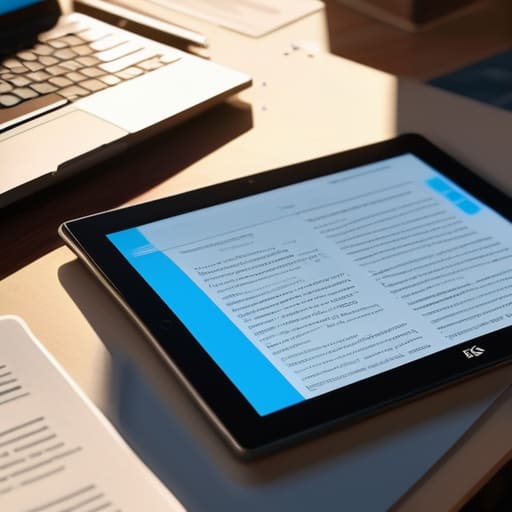
If you think a file format is just a technicality, you’re about to pay for it in one-star reviews. Most beginners assume that converting manuscript to epub is a simple “Save As” affair, but that is a lie that leads directly to broken CSS and floating images. You have two real choices: the DIY route using basic tools, or paying a professional for a bespoke digital book layout design. The former is free, but it often results in a file that looks like a ransom note on a Kindle Paperwhite. The latter costs a day rate you’ll actually feel, but it ensures your text flows correctly across every device.
The real ebook file formats comparison isn’t just about EPUB versus MOBI—it’s about the integrity of the reflowable text. If you skimp here, your metadata for ebooks might be perfect, but if the reader can’t adjust the font size without the chapters breaking, they won’t care about your brilliant prose. You can save a few hundred pounds on a formatter, but you’ll spend ten times that in customer service headaches and refund requests.
Five Ways to Avoid Turning Your Ebook Into a Financial Sinkhole
- Stop treating your first draft like a finished product. If you skip a professional developmental edit because you’re “saving money,” you’ll end up spending triple that amount on marketing to fix the reputation of a book that doesn’t actually work.
- Budget for a professional cover designer, not a Canva template. Readers judge a book by its thumbnail in 0.5 seconds; if your cover looks like a DIY project, your conversion rate will be zero, and no amount of “optimized metadata” can fix a visual failure.
- Test your files on more than just your own Kindle. I’ve seen authors lose half their five-star reviews because their formatting broke on a Nook or a tablet, and a $50 technical check is much cheaper than the cost of a bruised brand.
- Factor in the “hidden” cost of distribution. Between retailer percentages and the inevitable small fees for ISBNs or wide-distribution services, your projected royalty per unit is almost always lower than what you’ve written in your spreadsheet.
- Build a buffer into your production timeline. If you think you can go from “final manuscript” to “live on Amazon” in two weeks, you’re dreaming; between proofreading, formatting, and uploading, you need at least six weeks to avoid the panicked, error-prone mistakes that kill sales.
The Bottom Line: What You Actually Need to Carry Forward
Stop treating ebook production like a creative hobby and start treating it like a supply chain; if you haven’t accounted for the cost of professional formatting and metadata management, you aren’t “saving money,” you’re just deferring a loss.
Quality is a hedge against bad reviews, and in the self-publishing world, a single formatting error in an EPUB file is a permanent stain on your brand that no amount of clever marketing can scrub clean.
Protect your margins by knowing the difference between “essential” services and “vanity” add-ons; pay for the technical precision that ensures your book actually functions on a Kindle, but don’t let a freelancer talk you into a premium package for something a basic script could handle.
The Ghost in the Machine
“A beautiful manuscript is just a very expensive stack of digital paper until you’ve accounted for the technical friction of conversion; if you don’t budget for professional formatting, you aren’t producing an ebook, you’re just publishing a very long, very frustrating error message.”
Cressida Farrow-Bassey
The Bottom Line on Your Digital Debut
At the end of the day, ebook production isn’t a mystical rite of passage; it is a series of logistical hurdles that require a sharp eye and an even sharper spreadsheet. We have looked at the necessity of a streamlined workflow, the technical nightmare of choosing between EPUB and fixed layouts, and the reality that skimping on professional formatting is essentially a tax you pay in bad reviews later. You can try to DIY every single step to save a few hundred pounds, but if your file breaks on a Kindle Paperwhite, your readers won’t care how much you saved on the production side. Treat your metadata and your file integrity with the same respect you give your prose, because the technical side is what actually delivers your story to the reader’s eyes.
It is easy to get lost in the weeds of distribution fees and conversion errors, feeling like the machinery of publishing is designed to grind you down. But remember that once the files are polished, the formatting is locked, and the invoice is paid, you finally have something tangible. You have moved from being someone who merely writes to someone who actually publishes. The industry may be changing, and the traditional gatekeepers may be fading, but the ability to package a professional product and put it into the world is still a formidable, profitable skill. Now, stop staring at the production checklist and go finish that next chapter.
