The Complete Guide to Planning a Freelance Year
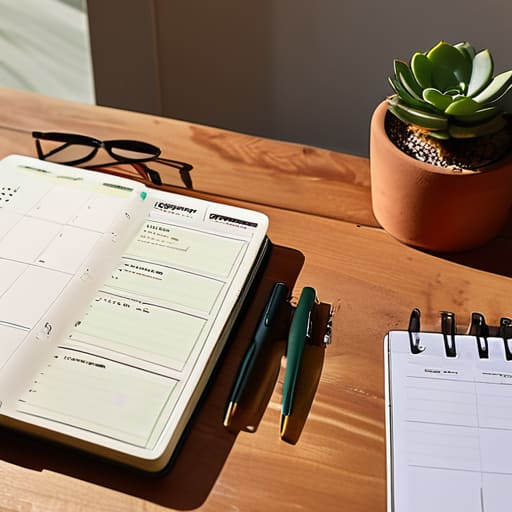
I spent my first three years as a freelance editor thinking that “planning” meant color-coding my Google Calendar and buying a leather-bound journal that cost more than my weekly grocery budget. I fell for the lie that if I just felt sufficiently organized, the money would follow. It didn’t. In reality, most of the advice you find online regarding a complete guide to freelance planning is just expensive fluff designed to make you feel productive while your bank account stays stagnant. Real planning isn’t about aesthetic planners or “manifesting” clients; it’s about the cold, hard math of managing your pipeline so you aren’t staring at a zero-balance screen in mid-August because you forgot that invoices don’t pay themselves.
I’m not here to sell you on a lifestyle of digital nomadism and sunrise yoga. Instead, I’m going to give you the unvarnished truth about how to actually structure your business to survive the feast-and-famine cycles. We are going to talk about calculating your true hourly rate, building a tax buffer that actually works, and why your project timeline needs to account for the inevitable human errors that always derail a deadline. This is a guide built on twenty-one years of mistakes, redundancies, and hard-won margins.
Optimizing Your Project Pipeline to Stop Leaving Money on the Table

The biggest mistake I see mid-career freelancers make is treating their schedule like a series of frantic, disconnected fires to be extinguished. You land a ghostwriting project, you dive in headfirst, and then you spend the next three months praying no one else calls. That isn’t a career; it’s a cycle of feast and famine that will eventually burn you out. Real project pipeline optimization means looking three months down the line to see where the gaps are. If your calendar is empty for October, you shouldn’t be celebrating the downtime; you should be aggressively pitching, because an empty slot in October is a mortgage payment you won’t be able to make in December.
You also have to stop viewing every new request as a “yes” or “no” binary. Effective managing client workload is about the nuance of the buffer. I always keep a twenty percent margin in my weekly capacity for the “urgent” copy edits that inevitably arrive on a Thursday afternoon. If you book yourself to the absolute brim, you aren’t being productive; you’re just making yourself fragile. Build your pipeline with enough breathing room to actually do the work, rather than just surviving the deadline.
Freelance Workflow Management Why Your Schedule Dictates Your Rate

Most writers treat their calendar like a suggestion rather than a contract. They see a gap between a developmental edit and a copy edit and think, “I’ll just squeeze in a quick ghostwriting project here.” That is how you end up working sixteen-hour days for a rate that, when calculated by the hour, barely covers the cost of the caffeine required to finish the job. Effective freelance workflow management isn’t about being a productivity guru or using color-coded apps; it is about realizing that your capacity is a finite, billable resource.
If you cannot tell a client exactly when a project will land on your desk—and more importantly, when it will leave it—you have no leverage. When you are scrambling to meet a deadline because you overcommitted, you aren’t just stressed; you are devaluing your brand. Real freelance time management strategies involve building in “buffer days” for the inevitable crises, like a client who decides they want a total structural overhaul forty-eight hours before the due date. You have to protect your schedule as fiercely as you protect your invoice totals, because a chaotic schedule is a direct tax on your profit margin.
The Five Non-Negotiables of a Sustainable Freelance Calendar
- Build a ‘buffer week’ into every month, because life—and more importantly, client revisions—will inevitably expand to fill every millisecond of your planned productivity. If you schedule yourself at 100% capacity, you aren’t being efficient; you’re just ensuring that the first time a client asks for a “quick turnaround” on a Friday afternoon, your entire month collapses like a poorly bound paperback.
- Stop treating your invoice dates as suggestions. A professional planning cycle includes a dedicated administrative day every fortnight where you do nothing but chase late payments, reconcile expenses, and update your tax provisions. If you don’t schedule time to get paid, you’ll find yourself with a very impressive portfolio and a very empty bank account.
- Categorize your projects by ‘effort-to-revenue’ ratio rather than just deadline proximity. I’ve seen too many writers take on high-maintenance, low-rate developmental edits that eat up three weeks of work, leaving them no room to accept a lucrative, streamlined copy edit that actually pays the mortgage. Plan your month around the money, not just the due dates.
- Treat your ‘research and reading’ time as a billable line item in your internal planning, even if you can’t charge the client for it. If you aren’t carving out specific blocks to read the current market or sharpen your craft, your output will eventually stagnate, and once your quality drops, your rates will follow it down the drain.
- Map your year around the ‘lull seasons.’ In publishing and freelance work, there are predictable troughs—usually late August and the mid-December slump—where the inquiries dry up. A proper plan involves front-loading your income during the busy spring and autumn surges so you aren’t frantically accepting sub-rate ’emergency’ work just to cover your January rent.
The Bottom Line: Three Truths to Carry Forward
Stop treating your calendar like a suggestion; if you don’t build buffer days into your project pipeline for the inevitable “emergency” revisions, you aren’t managing a workflow, you’re just volunteering your unpaid time.
A high day rate is useless if your pipeline is a series of feast-or-famine cycles; true stability comes from mapping your income against your invoice lag, not just your current workload.
Efficiency isn’t about typing faster, it’s about protecting your billable hours from the administrative rot—if you can’t automate your invoicing or standardize your intake, you are essentially paying yourself a lower hourly rate every single month.
The Myth of the Creative Itinerary
“Stop treating your calendar like a suggestion and start treating it like a ledger; if your plan doesn’t account for the gap between finishing a manuscript and actually seeing the bank transfer, you aren’t planning a career, you’re just scheduling your own burnout.”
Cressida Farrow-Bassey
The Bottom Line
At the end of the day, freelance planning isn’t about finding some mystical “creative flow”; it’s about the cold, hard logistics of how you spend your hours. We’ve looked at how a messy pipeline leaves money on the table and how a chaotic schedule effectively slashes your hourly rate without you even realizing it. If you aren’t tracking your project cycles against your actual capacity, you are essentially guessing your way through a business. You have to treat your time like the finite, billable commodity it is, ensuring that every deadline met and every invoice sent is part of a deliberate, calculated strategy rather than a desperate scramble to keep your head above water.
I know it feels unromantic. It’s much easier to sit in a café and wait for the muse to strike than it is to sit in a quiet room and reconcile a spreadsheet. But the truth is, the structure you build now is what actually buys you the freedom to be a writer later. When your rates are firm, your pipeline is full, and your tax buffers are set, you stop being a victim of the next slow month. Build the scaffolding around your craft so that the work itself can actually thrive, because professionalism is the only thing that ensures you’ll still be writing ten years from now.
