Being Ill When Nobody Pays Sick Leave

I remember staring at a blinking cursor in 2014, my head throbbing with a migraine so violent I couldn’t distinguish the screen from the wallpaper, while my brain frantically calculated the cost of a week of missed word counts. Most “wellness” gurus will tell you to just prioritize self-care or find a way to manifest abundance through mindfulness, but that is absolute rubbish when you’re staring at a dwindling savings account. When you are a freelancer, there is no paid sick leave; there is only the terrifying math of how to handle illness without income while your clients expect the same deadline-driven precision they paid for last month.
I am not here to offer you breathing exercises or spiritual platitudes. Instead, I’m going to give you the cold, hard mechanics of survival: how to restructure your current contracts to buy yourself time, how to build a “sickness buffer” into your day rates, and how to communicate with editors when you’re too unwell to perform. This is about protecting your livelihood when your body decides to go on strike, using the same pragmatic logic I use to manage my own invoices and overheads.
Building an Emergency Fund for Medical Emergencies

I’ve spent two decades watching writers scramble when a sudden bout of flu or a more serious diagnosis turns a productive month into a total vacuum. The mistake most people make is treating an emergency fund as a “nice-to-have” luxury for when they want a new laptop. In this industry, an emergency fund for medical emergencies isn’t a luxury; it is your primary piece of infrastructure. You need to calculate your absolute baseline—rent, utilities, and the basic groceries that keep you upright—and then multiply that by the number of weeks you could realistically be away from your keyboard without losing your sanity.
Building these financial safety nets for self-employed professionals requires a cold, unsentimental look at your monthly burn rate. I tell my clients to automate it: every time an invoice clears, a fixed percentage goes straight into a high-yield account that you do not touch for anything other than survival. If you wait until you’re actually sick to start saving, you’ve already lost the battle. You aren’t just saving for a doctor’s visit; you are buying yourself the right to rest without the crushing anxiety of a mounting pile of unpaid bills.
Budgeting for Unexpected Health Issues Before They Strike
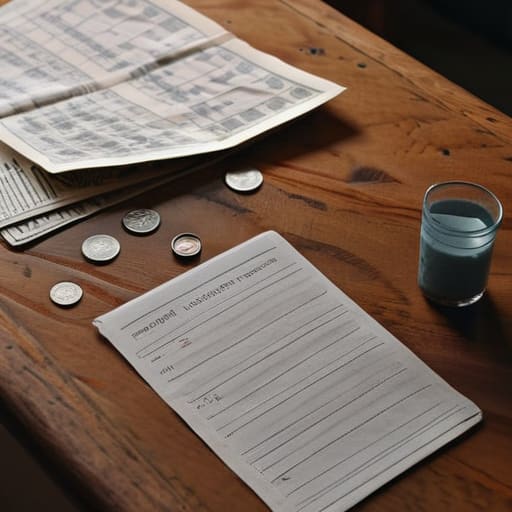
If you wait until you’re staring at a fever thermometer and a mounting pile of overdue invoices to look at your numbers, you’ve already lost. Budgeting for unexpected health issues isn’t about some vague sense of “preparedness”; it is a cold, hard audit of your survival threshold. You need to sit down with your bank statements and strip your life back to its barest essentials—rent, utilities, basic groceries—and figure out exactly what that monthly number is. This is your baseline for survival. Once you know that figure, you stop budgeting for the life you want to live and start budgeting for the life you need to maintain while you’re stuck in bed.
This is where most freelancers stumble: they treat their “good months” as the standard. If you’re pulling in a high day rate during a productive quarter, do not upgrade your lifestyle. Instead, divert that surplus into building financial safety nets for self-employed professionals. I tell my clients all the time: your goal isn’t to be rich; it’s to be unshakeable. Every extra pound or dollar should be viewed as a way to buy yourself the time to recover without the crushing weight of a zero-balance notification.
Five ways to stop the bleeding when your body decides to quit
- Negotiate your existing deadlines before the fever hits. Don’t wait until you’ve missed a milestone to send that email; tell your clients the moment you feel the crash coming. A professional extension requested in advance is a courtesy; a missed deadline with no explanation is a breach of contract that kills your reputation and your future invoices.
- Audit your “subscription creep” immediately. When you’re staring at a month of zero income, you don’t need the premium version of that research tool or the third streaming service. Go through your bank statement and kill every non-essential recurring cost. It’s not about being cheap; it’s about preserving your runway.
- Separate your “business” and “personal” survival math. If you’re a freelancer, your business expenses (software, hosting, insurance) shouldn’t be eating your grocery money. If you can’t pay your business overhead because you’re sick, you need to pause those services or move to the free tiers until you’re back at your desk.
- Look for the “micro-tasks” that don’t require heavy lifting. If you can’t manage a 5,000-word ghostwriting assignment, see if you can squeeze in a quick proofread or a structural audit on a smaller scale. It’s about keeping the cash flow moving, even if it’s just enough to cover the utility bill.
- Formalize your “sick day” rate into your future quotes. If you know that being out of commission for a week costs you £800 in lost revenue, that reality needs to be baked into your standard project fees. You aren’t just charging for the words on the page; you’re charging for the stability required to produce them.
The Bottom Line: Surviving the Gap
Stop treating your savings like a vacation fund; an emergency buffer isn’t for a trip to Tuscany, it’s the only thing standing between you and a debt spiral when a fever keeps you away from your keyboard for a week.
Treat your health like a business overhead—if you aren’t factoring the cost of potential downtime into your project quotes and day rates, you aren’t actually running a sustainable freelance business.
Build a “buffer month” into your cash flow expectations, because in this industry, the money you earn today usually won’t hit your bank account until you’re already halfway through the next project.
The Freelance Fallacy of "Pushing Through"
We love to romanticize the starving artist, but there is nothing poetic about a fever spike when you have three manuscripts due and a bank balance that requires you to be productive to survive. In this business, your body is your primary piece of equipment; if it breaks, the revenue stream doesn’t just slow down—it vanishes. You aren’t just managing a recovery; you are managing a total cessation of cash flow.
Cressida Farrow-Bassey
The Bottom Line on Staying Afloat
At the end of the day, navigating a health crisis as a freelancer isn’t about having a magical reserve of wealth; it’s about the ruthless application of the systems we’ve discussed. You can’t wish away a fever or an injury, but you can mitigate the fallout by having your emergency fund ready, your overheads trimmed, and a clear understanding of exactly how much your daily existence costs when the invoices stop rolling in. We spend so much time obsessing over the craft of writing that we often neglect the logistics of survival, but those logistics are what allow you to actually return to the desk once the recovery is over.
Please understand that being a professional means acknowledging that your body is, quite inconveniently, the primary piece of equipment you use to make a living. It will break down eventually, and when it does, the industry won’t step in to catch you—you have to be your own safety net. Don’t let the guilt of a missed deadline or a stagnant word count eat you alive while you’re trying to heal. Focus on the recovery, protect your remaining capital, and remember that your career is a marathon, not a sprint that requires you to run through a broken leg.
