The Complete Guide to Print on Demand
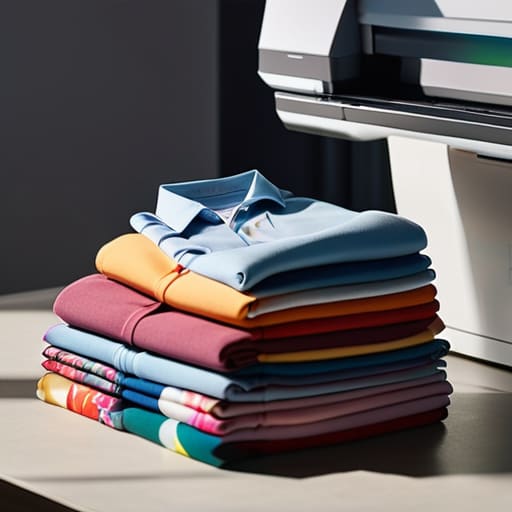
If you’ve spent more than twenty minutes on YouTube, you’ve likely been bombarded by some twenty-something in a rented studio telling you that a “complete guide to print on demand” is the golden ticket to effortless passive income. They make it sound like you simply upload a doodle of a cat, click a button, and watch the royalties roll in while you sip a latte. It’s a lie. In my twenty-one years of navigating the publishing trenches, I’ve learned that anything promising zero overhead and infinite profit is usually just a way to sell you a course. Print on demand isn’t a magic trick; it’s a supply chain management job that requires a very sharp eye for margins.
I’m not here to sell you a dream or a subscription to a “success mindset” seminar. What I am going to give you is a brutally honest breakdown of the actual mechanics: the platform fees that eat your lunch, the nightmare of color calibration, and how to price your products so you actually see a profit at the end of the month. This is a guide built on spreadsheets and reality, not hype. We are going to look at the numbers, the logistics, and the hidden costs that the influencers conveniently forget to mention.
The Print on Demand Business Model Explained Without the Fluff

Let’s strip away the “passive income” fantasy and look at the mechanics. At its simplest, the print on demand business model explained is just a way to offload the most expensive, most stressful parts of retail—inventory and storage—onto someone else. You provide the concept and the design; a third-party provider handles the printing, the packaging, and the shipping. It’s a way to test the waters without having a garage full of unsold t-shirts that you eventually have to sell to a liquidator for pennies on the pound.
However, don’t mistake “low barrier to entry” for “low effort.” When people talk about dropshipping vs print on demand, they often miss the nuance of quality control. In standard dropshipping, you’re often moving generic goods you’ve never touched. With POD, the product is your brand’s physical manifestation. If the ink bleeds or the shirt shrinks after one wash, it’s your reputation on the line, not the printer’s. You aren’t just a designer; you are the curator of a supply chain you don’t actually control, which means your margin for error is razor-thin.
Dropshipping vs Print on Demand Where Your Capital Actually Goes

If you’re staring at a spreadsheet trying to decide between dropshipping vs print on demand, stop looking at the potential revenue and start looking at the inventory risk. In traditional dropshipping, you’re essentially a middleman for someone else’s pre-made product; you find a supplier, list a generic gadget, and pray the shipping times don’t kill your customer service rating. It’s a volume game played with razor-thin margins where you have zero control over the actual item. You aren’t building a brand; you’re managing a logistics nightmare.
Print on demand is a different beast entirely. Here, your capital isn’t tied up in a warehouse full of unsold stock, but it is tied up in the cost of goods sold. When you run a print on demand profit margins calculation, you’ll see that your per-unit cost is significantly higher than a bulk-ordered item. You’re paying a premium for the luxury of not having a garage full of unsold t-shirts. It’s a trade-off: you sacrifice the massive margins of wholesale for the agility of a model that only charges you when a customer actually clicks ‘buy.’
The Margin Killers: Five Realities of Making Print on Demand Actually Pay
- Stop chasing every trending design on Pinterest. If you aren’t building a specific niche, you’re just competing in a race to the bottom on price, and in POD, the person who wins that race is usually the one who can afford to work for free.
- Treat your sample orders as a non-negotiable business expense, not a luxury. I’ve seen too many freelancers launch a shop only to realize their “premium” t-shirt feels like a recycled dishcloth; once your reputation is trashed by bad fabric, no amount of clever marketing will buy it back.
- Calculate your “true” profit per unit by factoring in the platform fees, the payment processor’s cut, and the inevitable customer service email. If your math only accounts for the cost of the shirt and the shipping, you aren’t running a business; you’re running an expensive hobby.
- Master the art of the boring backend. Everyone wants to talk about the “creative” side, but your success lives or dies in your SEO and your ability to manage inventory levels. If your keywords are generic, you’re shouting into a hurricane.
- Don’t fall in love with your first draft—or your first product line. The market is a cold, unsentimental judge. If a design hasn’t moved after a month of decent promotion, kill it, take the loss, and move on to something that actually has a heartbeat.
The Reality Check: Three Things to Remember Before You Buy the Domain
Stop chasing “passive income” myths; Print on Demand is a logistics job, not a magic money tree, and your real work will be managing design iterations and customer complaints rather than just clicking ‘publish.’
Your margins are thinner than they look on the dashboard, so if you aren’t calculating the cost of returns, platform fees, and marketing spend per unit, you aren’t running a business—you’re subsidizing a printer’s lifestyle.
Design is your only real leverage, but a pretty picture doesn’t guarantee a sale; you need to find a niche where people are actually looking to spend money, rather than just shouting into the void of a saturated marketplace.
The Myth of the Passive Income Engine
“Stop looking for a ‘passive income’ miracle; Print on Demand is a logistics job disguised as a creative one. If you aren’t prepared to spend your margins chasing design trends and auditing your printer’s quality control, you aren’t building a business—you’re just paying for the privilege of managing a very expensive, very stressful hobby.”
Cressida Farrow-Bassey
The Bottom Line on Print on Demand
If you’ve followed along this far, you know that Print on Demand isn’t a magic button for passive income; it’s a logistical puzzle that requires a sharp eye for margins. We’ve looked at how the model functions, stripped away the dropshipping comparisons, and identified where your capital actually goes. The takeaway is simple: you cannot ignore the hidden costs of production, shipping, and platform fees. If you build a business model based on a theoretical profit margin without accounting for the reality of a printer’s cut, you aren’t building a company—you’re just subsidizing a hobby. Success in this space requires treating your designs like products and your spreadsheets like sacred texts.
At the end of the day, the barrier to entry has never been lower, which is both a blessing and a curse. Anyone can upload a file, but very few people will bother to master the math that makes it sustainable. Don’t let the sheer volume of noise in the “side hustle” space discourage you; instead, let it sharpen your focus. If you approach this with the discipline of a professional rather than the whims of an enthusiast, you can build something that actually pays. Stop looking for the shortcut and start building the structure; the money follows the person who understands the mechanics.
