The Complete Guide to Audiobooks

If you’ve spent any time scrolling through “expert” blogs lately, you’ve likely been fed the same glossy lie: that audiobooks are a magic, effortless windfall for every author who decides to hit ‘record’ on a smartphone. It’s a seductive myth, but anyone who has actually sat in a studio for six hours straight knows that the reality is far more expensive and significantly more technical than a simple upload. I’m not here to give you a sunshine-and-rainbows version of this industry; I’m writing this complete guide to audiobooks because I’m tired of seeing writers get blindsided by production costs and predatory royalty splits that leave them with nothing but a headache.
I’m going to strip away the marketing fluff and show you how this actually works from the perspective of someone who has seen the ledger. We’re going to talk about the real math—from the steep upfront costs of professional narration to the way distribution platforms quietly nibble away at your margins. By the time we’re done, you won’t just know how to make an audiobook; you’ll know whether it’s actually worth your time and money to do it.
The Audiobook Publishing Process and the Hidden Production Debt
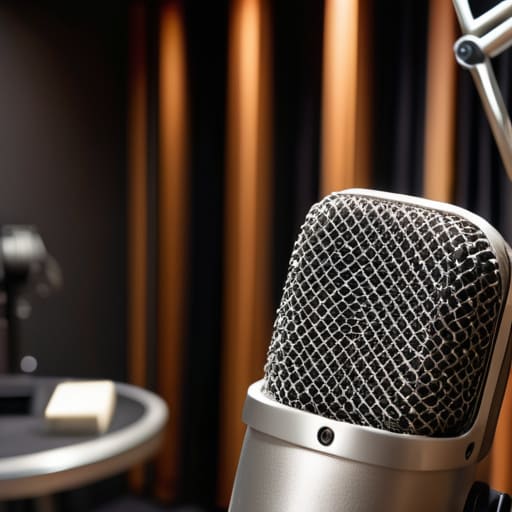
The audiobook publishing process is often sold as a seamless extension of your print release, but in reality, it is a separate, high-stakes production cycle that can quietly drain your budget before you’ve even earned a cent in royalties. You aren’t just paying for a reader; you are paying for the technical infrastructure required to prevent a listener from turning the book off after thirty seconds. This means investing in professional acoustics for voice recording and high-end studio environments. If you try to cut corners by recording in a spare bedroom with a basic USB mic, the “production debt” you accrue will manifest as a finished product that sounds amateurish, effectively killing your book’s momentum in a crowded market.
Then there is the matter of talent and the technical grind. High-quality voice acting for audiobooks is a specialized skill that requires more than just a pleasant tone; it requires stamina and an ability to maintain character consistency over twelve hours of recording. Once the performance is captured, the post-production—the editing, the mastering, and the file conversion—is where the real work happens. If you aren’t budgeting for a professional engineer to clean up those mouth clicks and breaths, you’re essentially asking your audience to listen to a demo rather than a professional production.
Investing in Acoustics for Voice Recording Without Going Broke
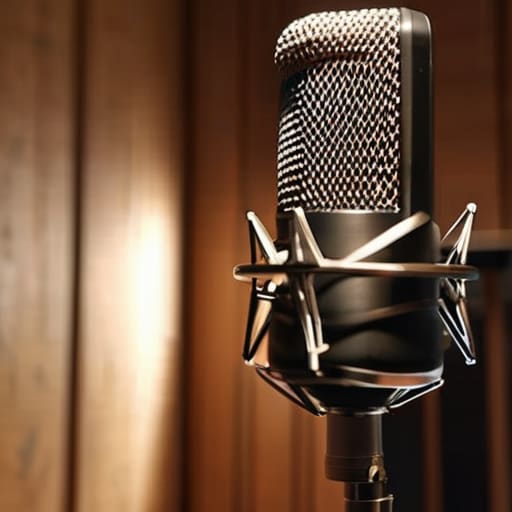
You don’t need a professional studio in a converted barn to produce a clean file, but you do need to understand that room tone is the silent killer of a professional narration. I’ve seen many debut authors pour their entire advance into high-end microphones, only to realize they’ve recorded a $500 piece of hardware inside a room that echoes like a gymnasium. If your acoustics for voice recording are subpar, no amount of post-production magic will save you from the dreaded “hollow” sound that makes listeners turn off a book within ten minutes.
Instead of chasing the most expensive recording studio equipment for narration, focus on the physics of the space. A heavy duvet, a well-placed bookshelf, or even a dedicated vocal booth made of acoustic foam will do more for your bottom line than a vintage Neumann. My rule of thumb is simple: spend sixty percent of your gear budget on a decent interface and microphone, and the remaining forty percent on killing the reflections in your room. You want a dry, intimate sound that lets the listener focus on the story, not the architectural flaws of your spare bedroom.
Five Ways to Avoid Getting Burned by the Audiobook Boom
- Don’t let a narrator’s “star power” blind you to the math; if the talent fee eats more than 25% of your production budget, you’re likely setting yourself up for a deficit that no amount of listens will ever recover.
- Treat your audiobook script as a separate entity from your print text, because reading a sentence that was designed for the eye often reveals structural clunkiness that only a listener’s ear can catch.
- Vet your production house by asking for a breakdown of the “mastering” costs—if they can’t tell you exactly how much is being allocated to noise reduction versus actual performance editing, they’re padding the invoice.
- Negotiate your distribution rights with a scalpel, not a sledgehammer; ensure you aren’t inadvertently handing over exclusive digital rights to a platform that will bury your title in an algorithm graveyard.
- Budget for a “technical proof” phase, which is essentially a final sanity check to ensure the narrator hasn’t swallowed a crucial ‘not’ or mispronounced a character’s name—errors that are much harder to fix once the files are live and the royalties are ticking.
The Bottom Line on Audio
Don’t mistake a high-quality recording for a high-quality product; you can spend three thousand pounds on a studio setup, but if your script hasn’t been tightened for the ear, you’re just subsidizing a very expensive mistake.
Treat production costs as a fixed debt that must be recouped before you see a single penny of profit, and always negotiate your royalty split based on the net, not the gross, or you’ll find yourself working for free.
The “all-in-one” production packages offered by some distributors are often a trap designed to skim the margins; knowing the granular cost of a narrator’s day rate versus the technical engineering fee is the only way to protect your investment.
The Production Mirage
Everyone wants to talk about the “reach” of audio, but nobody wants to talk about the math; you can have a million listeners, but if your production costs ate your entire advance and your royalty percentage was negotiated by someone who hasn’t seen a real invoice in a decade, you aren’t an author—you’re a subsidized hobbyist.
Cressida Farrow-Bassey
The Bottom Line on Sound
At the end of the day, producing an audiobook is less about “capturing magic” and more about managing a complex intersection of technical debt and rights management. We have looked at how the production process can quickly spiral if you haven’t accounted for the hidden costs of post-production, and how a decent acoustic setup is a non-negotiable investment rather than a luxury. If you go into this thinking you can wing the audio quality or ignore the granular details of your distribution contract, you will find yourself working for a net loss before you’ve even cleared your first thousand royalties. Treat the audio as a structural component of the book, not an optional add-on, and you might actually see a return on your labor.
It is easy to get discouraged by the math of it all—the shrinking margins and the high barrier to entry for professional-grade sound. But don’t let the spreadsheets rob you of the desire to hear your words spoken aloud. There is a profound, visceral power in the spoken word that print simply cannot replicate, and for many readers, the audiobook is the only way they engage with literature. If you approach this with a clear head, a realistic budget, and a disciplined workflow, you aren’t just making a product; you are ensuring your story survives in a medium that is increasingly becoming the heartbeat of the industry.
