Protecting the Hours You Do the Actual Work

I spent my first three years as a freelance editor thinking that “flow state” was a legitimate professional strategy, rather than a convenient excuse for poor time management. I would sit in my kitchen, waiting for the Muse to descend like a benevolent patron of the arts, only to realize at 4:00 PM that I hadn’t actually touched a single manuscript. If you are looking for a lifestyle blog that teaches you how to manifest productivity through scented candles and color-coded planners, you are in the wrong place. Learning how to plan a freelance week isn’t about finding your “zen”; it is about realizing that if you don’t treat your time like a finite, billable resource, you are essentially donating your life to your clients for free.
I’m not here to sell you on a productivity app or a mindfulness retreat. I am going to show you how I manage a rotating roster of ghostwriting deadlines and copy edits without losing my mind or my margin. We are going to talk about blocking out hours for deep work, accounting for the “admin creep” that eats your profit, and why you need to build a schedule that survives a sudden client crisis. This is about building a framework that ensures you actually get paid for the work you do, rather than just the work you hoped to do.
Freelance Productivity Systems That Actually Protect Your Income

Most people treat their calendar like a suggestion, but if you want to stay solvent, you need to treat it like a ledger. I’ve seen too many talented writers drown because they tried to “flow” through their tasks. You cannot “flow” through an invoice or a tax filing. Real freelance productivity systems aren’t about finding zen; they are about aggressive triage. I use a strict method of time blocking for freelancers that separates the heavy lifting—the actual drafting or deep editing—from the shallow, soul-sucking tasks like chasing unpaid invoices or formatting bibliographies.
If you don’t wall off your deep work, your day will be eaten alive by the “quick questions” from clients that inevitably turn into two-hour rabbit holes. I schedule my most cognitively demanding work for my peak hours and relegate the administrative rot to the late afternoon slump. This isn’t just about efficiency; it’s about balancing billable hours and admin so that the latter doesn’t cannibalize the former. If you spend four hours on an email chain that should have taken twenty minutes, you haven’t just lost time—you’ve actively lowered your hourly rate.
Time Blocking for Freelancers to Guard Your Billable Hours
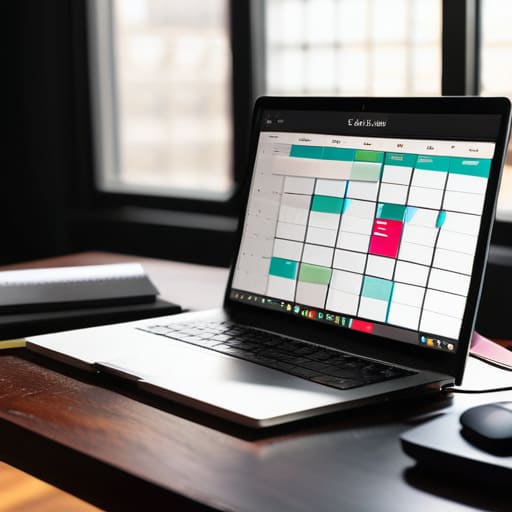
Most people treat a calendar like a suggestion, a polite list of things they might get around to if the mood strikes. But if you want to survive this industry, you have to treat it like a ledger. Time blocking for freelancers isn’t about finding “flow states” or chasing some mystical creative spark; it is about aggressive defensive maneuvering. You carve out specific, non-negotiable blocks for deep work—the kind of heavy lifting that actually moves the needle on an invoice—and you protect them like a hawk. If you don’t, the “quick” email from a client or the sudden urge to reorganize your bookshelf will bleed your afternoon dry.
The real trick to balancing billable hours and admin is realizing that they are two different animals. I never mix them. I have a block for drafting, a block for copy editing, and a separate, much smaller block for the soul-crushing reality of invoicing and chasing late payments. When you allow administrative sludge to seep into your writing time, you aren’t just losing minutes; you are devaluing your hourly rate by making your most expensive brainpower do your cheapest chores.
Five Ways to Stop Treating Your Calendar Like a Suggestion
- Batch your administrative rot. Do not let a single invoice, pitch email, or tax query bleed into your deep-work hours. If you respond to a client’s “quick question” at 11:00 AM on a Tuesday, you aren’t being helpful; you’re just devaluing the four hours of focused editing you were supposed to be doing. Pick one afternoon a week for the paperwork and stay out of your inbox the rest of the time.
- Build in a ‘buffer tax’ for the inevitable. Every project will take 20% longer than you think it will, and every client will miss a deadline by at least two days. If you schedule your week to 100% capacity, one minor crisis will trigger a domino effect that leaves you working until 2:00 AM on a Sunday. Plan for 80% capacity; use the other 20% to absorb the chaos.
- Separate ‘Creation’ from ‘Correction.’ I have learned the hard way that trying to ghostwrite a new chapter and copy-edit a manuscript in the same afternoon is a recipe for mental exhaustion and sloppy errors. Assign specific days to specific modes of thought. Monday is for heavy lifting and new drafts; Thursday is for the surgical, granular work of line editing.
- Audit your ‘Shadow Work’ every Friday. We all do it—the endless scrolling for “research” that is actually just procrastination, or the hour spent tweaking a website font. At the end of the week, look at your hours and ask: Did this activity move me closer to an invoice? If the answer is no, you aren’t working; you’re just playing at being a writer.
- Hard-stop the week to prevent burnout. In the freelance world, there is no boss to tell you to go home, which means you will naturally work until you are too tired to produce quality prose. Set a firm time on Friday afternoon when the laptop closes and the email notifications go silent. If you don’t protect your rest, your brain will eventually start charging you in mistakes and resentment.
The Bottom Line: Three Rules for Not Wasting Your Week
Treat your schedule as a financial document, not a suggestion; if a task doesn’t have a corresponding billable hour or a deadline attached to it, it’s a luxury you likely can’t afford during a busy week.
Stop treating “admin” like a guilty secret and start scheduling it; if you don’t block out time for invoicing and chasing late payments, you’ll find yourself with a full calendar and an empty bank account.
Build in a buffer for the inevitable “urgent” revision request, because if you book yourself to 100% capacity, the first client who demands a same-day turnaround will knock you straight into a deficit.
The Myth of the Creative Flow
“Stop waiting for ‘the muse’ to show up and start treating your calendar like a ledger; if you haven’t allocated specific blocks for deep editing and administrative billing, you aren’t running a business, you’re just hosting an expensive, disorganized retreat for your own procrastination.”
Cressida Farrow-Bassey
The Bottom Line
At the end of the day, planning your week isn’t about finding some magical state of flow or achieving a Zen-like productivity nirvana. It is about the cold, hard math of survival. You’ve looked at the systems that protect your income, you’ve learned to time-block so your administrative drift doesn’t eat your profit, and you’ve realized that an unscheduled hour is often just an hour you’ve accidentally donated to a client for free. If you don’t treat your calendar like a financial ledger, you will find yourself at the end of every month wondering why you worked sixty hours but only have forty worth of invoices to show for it. Structure is your only defense against the slow erosion of your professional value.
I know it feels heavy. I know that after a decade of staring at manuscripts and chasing late payments, the idea of more “systems” feels like just another chore on an already overflowing plate. But please understand that I am not asking you to become a corporate drone; I am asking you to respect your own labor enough to fence it in. When you master your schedule, you stop being a person who reacts to the whims of an inbox and start being a professional who dictates their own terms. You deserve to be paid for your expertise, not just your availability. Go build a week that actually works for you, rather than one that simply happens to you.
