Stop Treating Your Manuscript Like a Diary: How to Edit Your First Draft Before an Editor Tells You It’s Unpublishable.

Stop looking for a “magic ritual” or a spiritual breakthrough to help you figure out how to edit your first draft. Most of the writing gurus will tell you that you need to find your “inner voice” or wait for the muse to return before you can touch a red pen, but that is expensive, romanticized nonsense. In my twenty-one years of looking at manuscripts—both the ones that went to print and the ones that died in a drawer—I’ve learned that editing isn’t about inspiration; it’s about brutal, structural triage. Your first draft is a collection of raw materials, and if you treat it like a sacred text instead of a construction site, you’re going to end up with a mess that no editor can save.
If you find yourself staring at a structural mess and feeling like you’re drowning in your own prose, don’t try to white-knuckle it alone. Sometimes you just need a fresh set of eyes or a community that understands the grind of actually getting words onto a page. I’ve found that connecting with groups like w4m perth can be a decent way to find that much-needed external perspective when your own brain has become too close to the text to see the flaws. It isn’t about finding a magic cure for a bad manuscript, but it is about breaking the isolation that makes editing feel like a personal failure rather than the professional process it actually is.
I’m not here to hold your hand through an emotional journey of self-discovery. Instead, I’m going to give you the actual mechanics of the process: how to spot the structural rot, how to kill your darlings without feeling like a murderer, and how to manage your time so you aren’t staring at a blinking cursor for three weeks. We’re going to treat this like the job it is, focusing on logic, pacing, and economy, so you can move from a pile of words to a manuscript that actually works.
The Costly Mistake of Confusing Revising vs Editing Differences
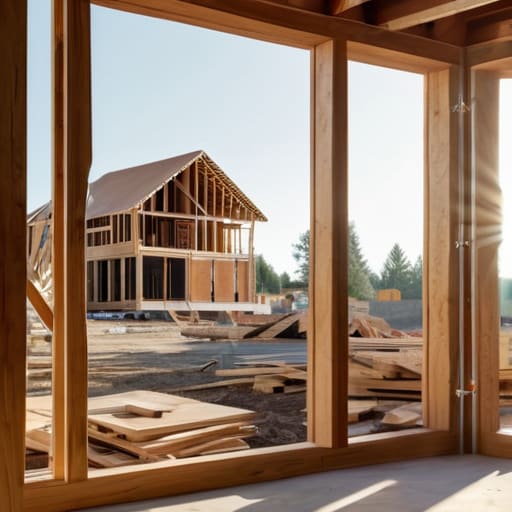
Most writers treat these two stages like they’re interchangeable, but that’s a mistake that will drain your bank account faster than a bad agent. When I talk about the revising vs editing differences, I’m talking about the difference between moving the walls of a house and choosing the color of the curtains. Revising is the heavy lifting. It’s where you look at the skeleton of your story and realize the third act is a hollow shell or that your protagonist has the personality of a damp sponge. If you try to fix a broken plot by swapping out adjectives, you aren’t editing; you’re just rearranging the deck chairs on the Titanic.
Once you’ve actually fixed the structure, then—and only then—do you move into the granular work of polishing prose and style. This is where you hunt for repetitive sentence structures and tighten the screws on your dialogue. If you jump straight into fine-tuning your commas before you’ve even decided if the scene needs to exist, you are effectively wasting your time. You can’t polish a turd, and you certainly shouldn’t pay a professional to do it for you.
A Structural Editing Checklist to Stop Wasting Your Time
Before you even think about touching a thesaurus or worrying about whether you’ve used “that” too many times, you need to look at the bones. I see so many writers dive straight into polishing prose and style when their actual foundation is cracked. It’s like trying to pick out the perfect curtains for a house that hasn’t been plumbed yet. You aren’t looking for better adjectives right now; you are looking for holes in your logic and gaps in your pacing.
When I sit down with a messy manuscript, my structural editing checklist starts with the big, ugly questions. Does the inciting incident actually happen early enough to keep a reader from closing the book, or are you spending forty pages on backstory that serves no purpose? Is your protagonist making choices, or are they just being dragged through the plot by the whims of the author? If the internal logic doesn’t hold, no amount of improving narrative flow at the sentence level will save you from a total collapse in the second act. Fix the skeleton first, or the skin will never sit right.
Five Ways to Stop Treating Your First Draft Like a Sacred Text
- Kill your darlings before they kill your budget. You’ll find a scene you spent three days perfecting that serves absolutely no purpose for the plot or the character. It’s beautiful, it’s lyrical, and it’s dead weight. Cut it. If you keep it just because you’re attached to the prose, you aren’t editing; you’re hoarding.
- Read it aloud, even if you feel like a fool. Your eyes are trained to skip over typos and awkward rhythms because your brain knows what you meant to write. Your ears, however, are much harder to fool. If you run out of breath mid-sentence, the sentence is too long. If you stumble over a phrase, the rhythm is broken.
- Separate the “What” from the “How.” Don’t try to fix a clunky metaphor while you’re still trying to figure out if the character’s motivation even makes sense. Fix the logic of the story first, then go back and fix the mechanics of the sentences. Trying to do both at once is a recipe for a mediocre middle and a very expensive second draft.
- Check your pacing with a stopwatch, not a feeling. If you feel like a chapter is dragging, it probably is. Look at the word count of your scenes; if your high-tension confrontation is only 400 words but your breakfast scene is 2,000, you have a structural imbalance that no amount of “better adjectives” will ever fix.
- Walk away for at least a week. You cannot edit a manuscript you still have the “writer’s high” from. You need enough distance so that when you open that file again, you see what is actually on the page, not the shimmering, perfect version you have currently living in your head. Distance is the only way to regain objectivity.
The Bottom Line
At the end of the day, editing isn’t some mystical act of divine intervention; it’s a series of logistical decisions. You have to distinguish between the high-level structural heavy lifting and the granular, sentence-level polishing, or you’ll find yourself staring at a pile of corrected commas while your entire third act is still collapsing under its own weight. If you follow a checklist, respect the difference between revising and copy editing, and treat your manuscript like a professional asset rather than a precious child, you’ll save yourself more than just time. You’ll save the thousands of pounds in professional fees that come from handing an editor a mess they have to rebuild from the ground up.
Look, I know it feels brutal to take a hammer to something you spent months bleeding over. It’s exhausting, and frankly, it’s often quite lonely work. But remember that the goal isn’t to strip away your voice; it’s to clear away the clutter so that your voice can actually be heard without the reader tripping over your technical errors. A great book isn’t written; it is re-written, pruned, and disciplined into existence. So, take a breath, grab another coffee, and get back to the desk. The version of this book that people actually want to pay for is waiting on the other side of this edit.
