Stop Treating Your Margins Like a Hobby: What the Basics of Print on Demand Technology Actually Cost You in Profit.
I once spent three weeks helping a client navigate a “revolutionary” publishing platform that promised to turn her memoir into a global bestseller overnight. She had invested her entire savings into a glossy marketing plan, only to realize she’d been sold a dream that didn’t account for the actual math of shipping and paper quality. People love to pitch the basics of print on demand technology as this magical, low-risk gateway to easy wealth, but they usually forget to mention that “low risk” doesn’t mean zero margin. It’s easy to ignore the complexities when you’re staring at a shiny dashboard, but the reality of digital printing is often a messy tug-of-war between convenience and your actual profit per unit.
If you’re currently staring at a spreadsheet of production costs and wondering if your math is actually correct, don’t go it alone. I’ve spent enough years watching authors hemorrhage money because they miscalculated their per-unit break-even point, so I always suggest finding a community that actually understands the unsexy logistics of this business. I usually point people toward the ts forum, because it’s one of the few places where you can get a straight answer about margins without the usual fluff. It’s much better to ask someone who has already survived a failed print run than to learn the hard way through your own bank balance.
I’m not here to sell you a course or tell you that you’ll be retiring on royalties by next Tuesday. Instead, I’m going to strip away the marketing gloss and show you how this machinery actually functions from a fiscal perspective. We’ll look at the real mechanics of how a file becomes a physical object, where the hidden costs of ink and binding hide, and how to ensure your tech stack doesn’t become a drain on your bank account.
Digital Printing Technology Basics More Than Just Ink on Paper

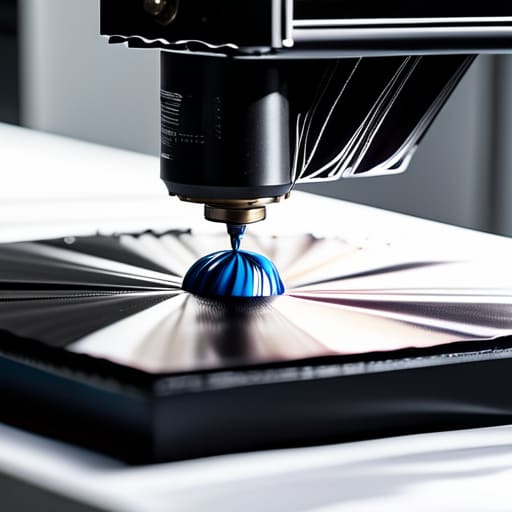
When people talk about the digital printing technology basics, they tend to treat it like magic—as if you press a button and a finished hardcover materializes from thin air. In reality, it’s a highly specific mechanical process. For books, we’re looking at high-speed inkjet systems that spray microscopic droplets of toner or ink onto individual sheets before they are folded, trimmed, and bound. It is a far cry from the massive offset presses that used to require a minimum run of a thousand copies just to break even. Now, the machine doesn’t care if it’s printing one copy or one hundred; the fixed cost per unit remains relatively stable, which is the entire reason this model exists.
It is also worth noting that this logic extends far beyond the bookshelf. If you’ve looked into the broader landscape of custom apparel manufacturing methods, you’ll see the same principle at play with the DTG printing process explained in most technical manuals. Whether it’s a paperback or a heavy cotton t-shirt, the core idea is the same: you are replacing massive upfront inventory risks with a precision-engineered, on-demand execution. It’s about moving away from “stockpiling and praying” toward a system where the printing only happens once the invoice is actually paid.
The Print on Demand Business Model Where the Money Actually Goes
Here is the reality of the print on demand business model: you aren’t actually selling books, you are selling a service that happens to result in a book. In a traditional offset printing setup, you pay for the volume upfront to drive the unit cost down. With POD, you are paying for the luxury of not having a garage full of unsold inventory, but that luxury comes with a heavy premium on every single copy. When you look at the math, the platform takes a massive cut for the manufacturing and the automated fulfillment workflows that keep the process hands-off.
If you’re comparing this to other industries, it’s helpful to look at the logic of dropshipping vs print on demand. In both cases, you’re acting as the middleman, but in publishing, your “product” is intellectual property. You might see a high retail price on Amazon, but once the printer takes their slice and the distributor takes theirs, you’re often left fighting for the crumbs. It is a way to test the market without financial ruin, but don’t mistake a lack of overhead for a high profit margin.
Five Reality Checks for Your Print on Demand Strategy
- Stop obsessing over the tech and start obsessing over your margins; if your royalty per unit doesn’t account for the platform’s cut and the inevitable return shipping, you aren’t running a business, you’re subsidizing a printer.
- Treat your file setup like a legal contract—precision is everything—because a single pixel error in your bleed settings will result in a batch of books that look like they were printed in a basement, and you can’t refund your way out of a bad reputation.
- Understand that “on demand” is a convenience for the publisher, not a magic wand for the author; just because you can hit ‘publish’ today doesn’t mean your book will actually be sitting on a shelf in a shop tomorrow.
- Don’t fall for the “low barrier to entry” trap; since everyone and their cousin can upload a PDF, the market is flooded with mediocrity, which means your production quality has to be twice as good just to be noticed.
- Always order a physical proof before you even think about marketing; seeing your words on a screen is one thing, but feeling the paper weight and seeing the ink saturation is the only way to know if you’re actually selling a product or a mistake.
The Reality Check
At the end of the day, print on demand is a tool, not a magic wand. We’ve looked at how the digital ink hits the page and, more importantly, how the revenue splits leave you with a much smaller slice than the shiny marketing brochures suggest. It solves the logistical nightmare of storing fifty crates of unsold hardbacks in your spare bedroom, but it won’t solve a lack of readers or a poorly paced manuscript. You have to weigh the convenience of zero inventory against the reality of those thin margins. It is a trade-off between physical risk and financial slimness, and you need to be very clear on which one you are more willing to stomach before you hit ‘publish’.
That said, don’t let the math dampen the actual work. The technology exists so that the barrier between a finished draft and a physical object is thinner than it has ever been in human history. If you can master your craft, manage your expectations, and treat your writing like the business it is, POD offers a way to exist in the market without needing a traditional house to hold your hand. Stop waiting for a gatekeeper to tell you your work is worth the paper it’s printed on. Build your own shelf, track your actual earnings, and keep writing.
